The Niagara Gorge: A Place of Peril
Rescue, risk and tragedy
The Niagara Gorge, carved by the river over thousands of years, shows off dramatic rock layers and wild water below the Falls. Its beauty hides real danger — and some dramatic human stories, both in the gorge and on the river above it.
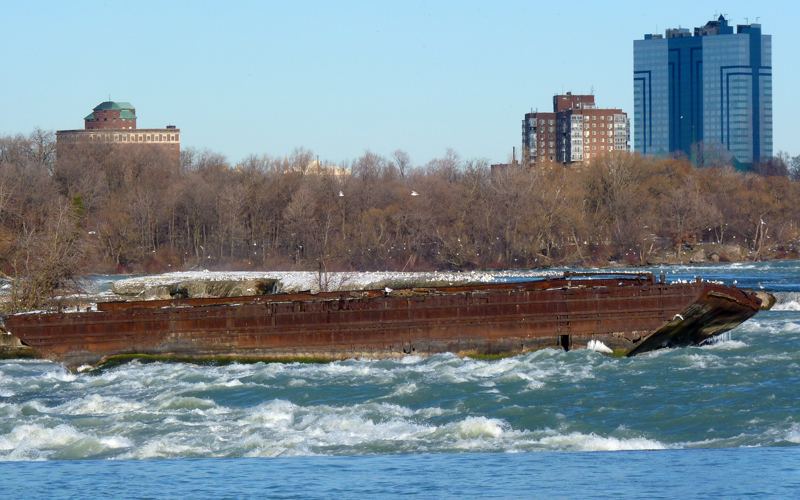
Upstream of the Falls, in the upper river, a dredging scow (a flat-bottomed work boat) broke loose in 1918 and drifted toward the Horseshoe Falls with two men on board. It grounded on rocks just upstream of the brink, trapping Gustav Lofberg and James Harris in the rapids. Rescuers fired a line out to the scow and brought both men to shore in a breeches buoy — a seat hanging from a rope — while crowds watched. The rusting scow still sits in the upper rapids today, a century-old reminder of the river's force.
Here in the gorge, the rapids have claimed others. In 1975, a commercial raft flipped in the rapids, throwing its passengers into the water. Three people drowned before rescuers could reach them.
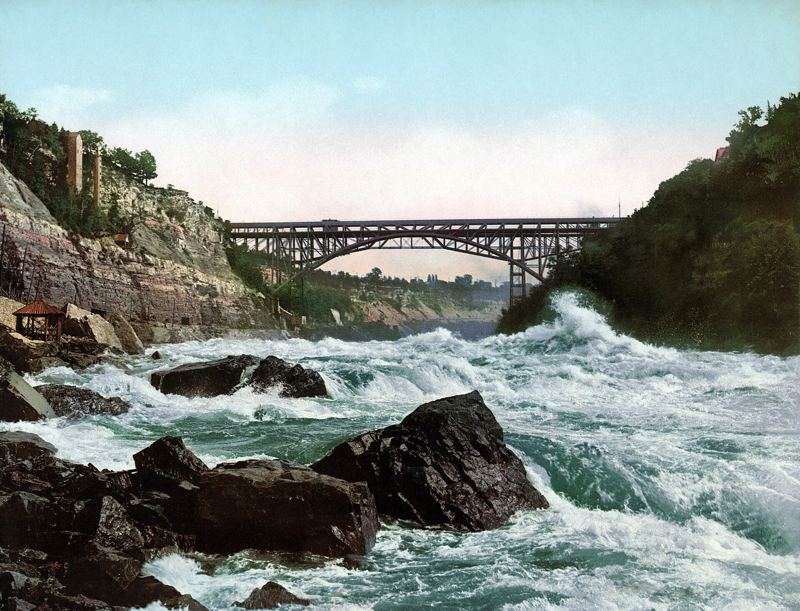
Some daredevils tried to master the gorge rather than survive it. Tightrope walker Stephen Peer, inspired by earlier crossings, walked across the gorge on a wire. In 1887 he fell to his death from his own cable.
These stories of rescue, risk and tragedy remind us that the Niagara Gorge isn't only a record of geological time. It's a landscape that can change the course of people's lives.
This sign stands at Niagara Parkway, at the White Water Walk. See it on the map
Next sign 17The River That Divides the Water Niagara Parkway, at the WhirlpoolPhoto credits
- Diego Torres Silvestre, CC BY 2.0, via Wikimedia Commons
- Detroit Publishing Co., Public domain, via Wikimedia Commons

