
It Looks Frozen. It Isn't.
The 1912 ice bridge
In January 1912, the ice bridge below the Falls looked solid enough to walk on — and for years, people had. Vendors set up hot-drink stands on it. Tourists strolled across it. Each winter it was an attraction of its own.
On February 4 of that year, the ice bridge broke apart without warning while people were standing on it. Three of them died: Eldridge and Clara Stanton, a young couple from Toronto, and Burrell Hecock, a 17-year-old from Cleveland who stayed to try to help them. They were carried downstream on the breaking ice before anyone could reach them. Another man, Ignatius Roth, made it to shore. After that, walking on the ice bridge was banned, and the ban has never been lifted.
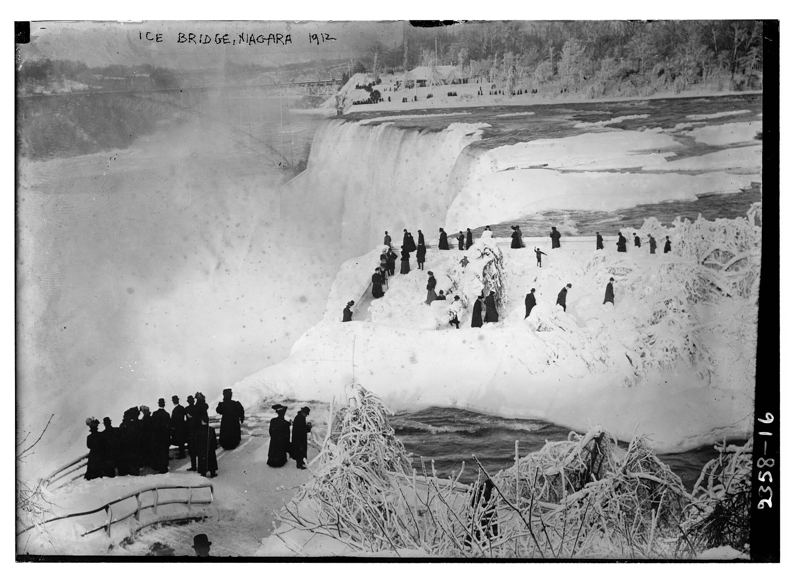
The danger wasn't obvious because the ice looked permanent. That's the illusion Niagara creates every winter — surfaces that look solid over water that never stops moving. The Falls themselves never freeze; there is too much water moving too fast. What looks like a frozen waterfall is really frozen mist and spray coating everything around the moving water, built up layer by layer until the whole scene looks still.
The ice bridge that killed three people in 1912 had formed the same way every winter for as long as anyone could remember. It looked just like every other year. It simply chose that February to let go.
Niagara in winter is the same Falls it always is. It just looks like it isn't.
This sign stands at River Road, below the Falls. See it on the map
Next sign 15Niagara on Screen River Road, near the Rainbow BridgePhoto credits
- Bain News Service, publisher, Public domain, via Wikimedia Commons
