
When the Water Stopped
The day Niagara Falls went silent
Niagara Falls hasn't always looked like this.
About 12,000 years ago, at the end of the last Ice Age, huge glaciers melted and released enormous amounts of water. That water carved a path between two Great Lakes and began spilling over a rocky cliff — forming the first Niagara Falls.
In those early years the flow wasn't steady. As the glaciers shifted and the meltwater found new routes, the water draining the upper Great Lakes sometimes went another way. For thousands of years, starting around 10,500 years ago, much less water flowed here, and the Falls were far smaller than today, before the river settled into the flow we see now.
That wasn't the only time the water stopped.
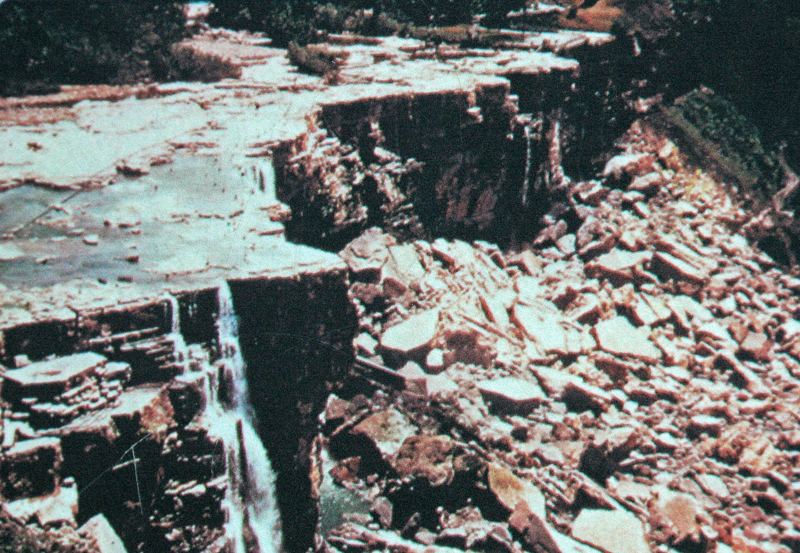
In 1969, engineers shut off the American Falls to study its rock face. They built a temporary rock-and-earth dam, called a cofferdam, upstream to send the river toward the Horseshoe Falls instead. For about five months the American Falls stood dry. Visitors walked on the exposed riverbed and saw something almost no one in history had seen: a silent cliff where water normally roars.
When the study was finished, the dam was removed and the water came back. The engineers decided to leave the fallen boulders at the base of the falls where they were.
Niagara feels permanent. But its history shows something different. The Falls exist because water flows here — and when the water moves, everything changes.
This sign stands at Queen Victoria Park, facing the American Falls. See it on the map
Next sign 11Holding the Falls Together Queen Victoria Park, facing the American FallsPhoto credits
- James St. John, CC BY 2.0, via Wikimedia Commons
